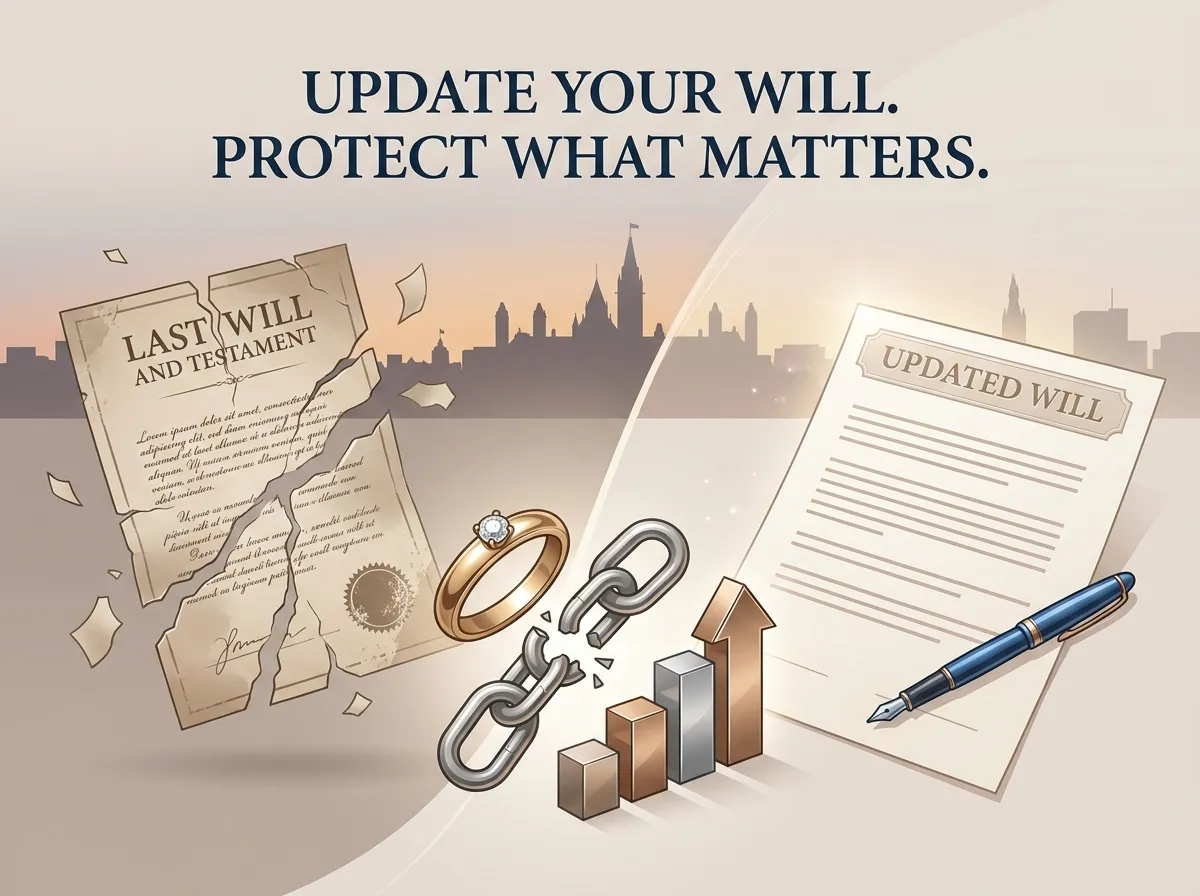
1. Introduction: Estate Planning as Business Risk Management – Why Outdated Documents Create Legal Vulnerabilities
Estate planning isn’t just about distributing assets—it’s a crucial risk management tool, especially for entrepreneurs and professionals with growing wealth. Unfortunately, outdated wills and legal documents can create major legal liabilities, including unwanted beneficiaries, business ownership disputes, and tax complications.
In Ontario, your estate plan must adapt to life’s big changes—especially marriage, divorce, or rapid business growth. Each of these events can invalidate, override, or expose weaknesses in your estate documents, making regular reviews essential to protect both personal and business assets.
Let’s dive into how each life event affects your estate plan, and how to strategically update your documents to stay protected.
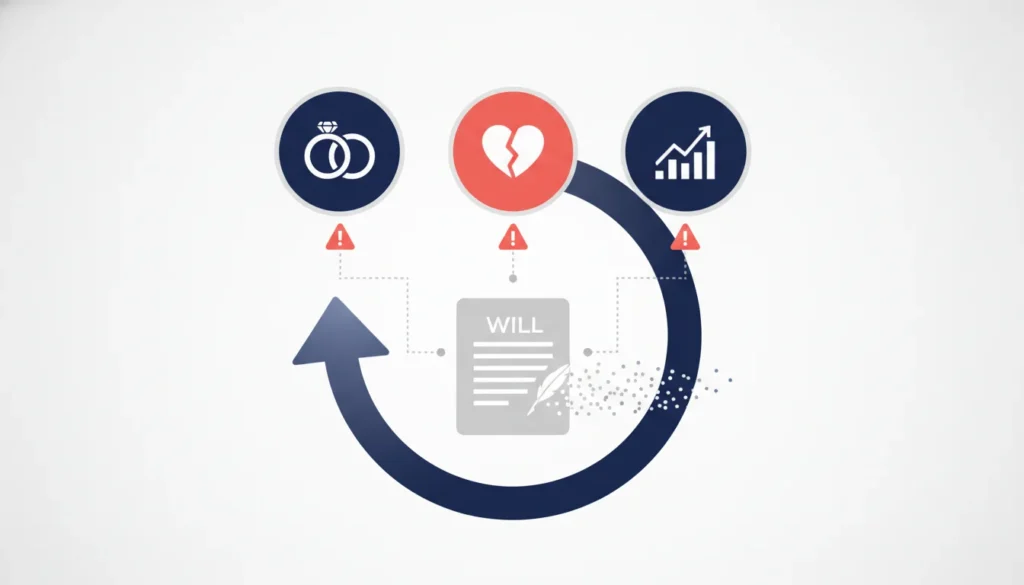
2. Marriage and Estate Planning in Ontario: Automatic Revocation Rules and Spousal Rights Under the Family Law Act
When you get married in Ontario, your existing will is automatically revoked unless it was made in contemplation of that specific marriage. This means that if you fail to create a new will after marriage, you risk dying intestate—without a valid will—leaving your estate subject to provincial laws.
Key Implications:
- Your new spouse may be entitled to preferential shares and a division of property, overriding previous intentions.
- Business assets not shielded in trusts or corporate agreements may be exposed.
- Children from previous relationships may lose intended inheritance.
Legal Framework:
The Succession Law Reform Act governs will revocation and spousal entitlements. Additionally, the Family Law Act grants surviving spouses rights to equalization of net family property, which can include business equity.
Strategy:
Update your will immediately after marriage and consider implementing marriage contracts or pre-nuptial agreements to protect business assets.
3. Divorce and Estate Document Overhaul: Protecting Business Interests and Eliminating Ex-Spouse Claims
Unlike marriage, divorce does not revoke a will in Ontario. However, once the divorce is finalized, your ex-spouse is treated as if they predeceased you in most estate documents—yet this only applies to specific clauses like executor appointments or gifts.
Hidden Risks After Divorce:
- Beneficiary designations on insurance policies, RRSPs, or pensions do not change automatically.
- Shareholder agreements or trusts may still name the ex-spouse.
- If you die before finalizing your divorce, your ex may still inherit under a prior will or intestacy rules.
Protective Actions:
- Revoke and replace your will and power of attorney documents.
- Update beneficiary designations with financial institutions.
- Re-examine corporate and shareholder agreements.
- Review any jointly owned property to avoid unintended survivorship transfers.
Visit FSRA Ontario for guidance on changing beneficiaries on financial products.
4. Business Growth as an Estate Planning Trigger: Aligning Shareholder Agreements with Succession Strategy
A growing business changes your net worth—and your estate planning priorities. Whether you’re onboarding investors, expanding operations, or incorporating, your estate plan must evolve in tandem to avoid probate complications, tax liabilities, or internal disputes.
Estate Planning Triggers from Business Growth:
- Incorporating or restructuring ownership
- Bringing on new shareholders or investors
- Creating or amending shareholder agreements
- Expanding internationally or acquiring assets
Legal and Financial Strategies:
- Implement dual wills: One for business assets (avoids probate), and one for personal property.
- Align buy-sell clauses in shareholder agreements with your will.
- Consider family trusts to hold shares and manage succession.
- Integrate tax-efficient exit strategies (e.g., estate freeze).
Refer to CPA Canada’s business succession guide for more insight on structuring for growth and transition.
5. The Complete Estate Review Checklist: Documents Requiring Updates After Major Life Changes
Here’s a comprehensive checklist of estate planning documents that should be reviewed and updated after major life events:
| Document | Reason for Update |
|---|---|
| Will | Reflect new spouse, exclude ex-spouse, add new beneficiaries, update asset values |
| Power of Attorney (POA) | Ensure trusted individuals are still appropriate choices |
| Beneficiary Designations (RRSP, TFSA, life insurance) | Avoid accidental gifts to former partners |
| Shareholder Agreements | Align with succession plan, update business valuation |
| Trust Documents | Revise trustees or beneficiaries if family structure has changed |
| Prenuptial or Marriage Contracts | Protect business and personal assets before/after marriage |
| Real Estate Titles | Review joint ownership and survivorship rights |
| Corporate Bylaws/Resolutions | Reflect new ownership or management structure |
6. Your Strategic Estate Review Timeline: When Life Events Demand Immediate Action vs. Scheduled Reviews
To maintain legal and financial protection, your estate plan should be reviewed immediately after major life events, and periodically thereafter.
Immediate Triggers for Review:
- Marriage or common-law partnership
- Divorce or legal separation
- Birth or adoption of a child
- Business incorporation or exit
- Death of a beneficiary, executor, or POA
- Serious illness or incapacity
- Change in residency or citizenship
Scheduled Reviews:
- Every 3–5 years
- Before major financial decisions (selling real estate, new investments)
- When tax laws or estate laws change
Use your accountant, lawyer, and financial advisor as part of a coordinated review team to ensure tax efficiency and legal compliance across jurisdictions.
7. Conclusion: Transforming Estate Planning from Reactive Task to Proactive Asset Protection Strategy
Many people only think about estate planning in times of crisis—but that’s when it’s often too late to protect your interests. The most effective estate plans are proactive, not reactive. They evolve with your personal life and business success.
Updating your estate documents after marriage, divorce, or business growth is not only good practice—it’s an essential part of protecting what you’ve built, preserving your family’s future, and ensuring your legacy unfolds exactly as you intended.
Next Steps:
- Schedule an estate review with a legal and financial advisor.
- Use a secure digital vault to store and track updated documents.
- Educate your executors and successors about your current plan.
Legal Disclaimer
The information in this article is provided for general informational purposes only and is not legal advice. No content here shall be interpreted as implying that Dimitrov Law Professional Corporation or Atanas Dimitrov are the best or superior to any other lawyers or law firms. For guidance related to your specific situation, please consult a qualified professional.
Call to Action
Message us here with any questions OR visit our website: https://dl-pc.ca/.