
Misclassifying a worker in Ontario as an independent contractor when they legally qualify as an employee can cost your business tens of thousands of dollars and far more if you don’t catch it early.
Ontario’s Employment Standards Act, 2000 (ESA) imposes strict penalties on companies that get classification wrong. Even if both parties agree to a contractor arrangement, the Ministry of Labour and Ontario courts will look at the actual working relationship, not the label on paper.
In this article, we’ll explain the differences between employees and contractors under Ontario law, the legal tests used to determine worker status, and the critical steps every business must take to avoid costly penalties and audits.
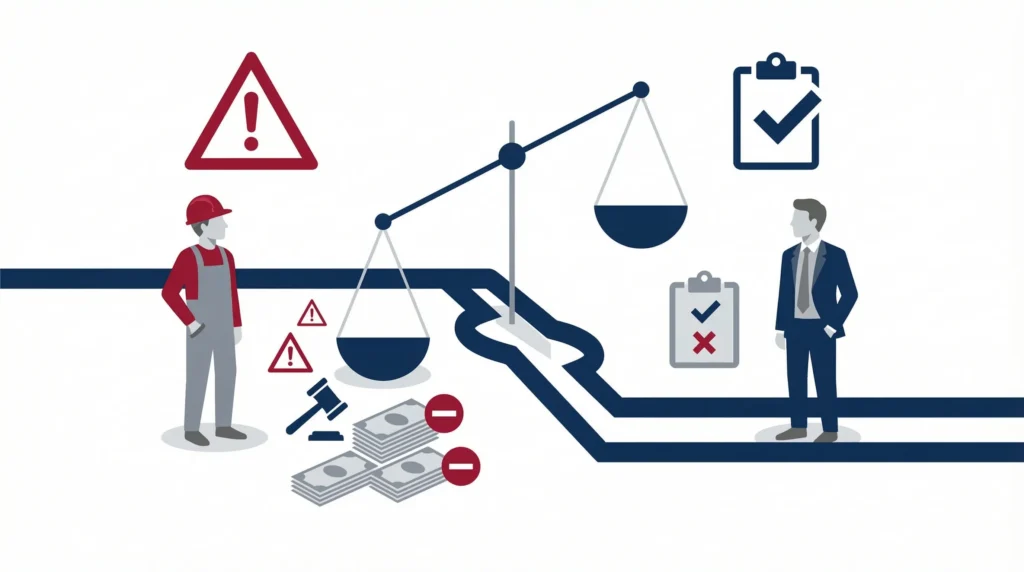
The High Cost of Worker Misclassification in Ontario
Some employers misclassify workers to cut costs, avoiding EI, CPP, WSIB premiums, and vacation pay. But the risk far outweighs the savings.
Under the ESA, a misclassified contractor can claim:
- Unpaid wages
- Overtime and public holiday pay
- Termination or severance entitlements
- Vacation pay (minimum 4%)
- And more, retroactively up to three years
According to the Ministry of Labour, targeted enforcement has recovered over $10 million in unpaid wages in recent years. Industries frequently audited include:
- Construction
- Hospitality
- Transportation and logistics
- Healthcare
- Tech and creative agencies
Real-World Example:
A misclassified worker earning $50,000/year over 3 years could lead to over $20,000 in back pay, vacation pay, and termination entitlements excluding fines and legal fees.
Legal Definition: Contractor vs. Employee Under the ESA
The ESA doesn’t offer black-and-white definitions of “employee” and “contractor.” Instead, the Ministry and courts focus on the true nature of the relationship, using a multifactor approach rooted in common law.
You can’t rely solely on a contract that says “independent contractor.” If the worker is economically dependent and integrated into your business, they may still be classified as an employee.

The Control Test: How Ontario Courts Determine Worker Status
Ontario uses the “Control Test”, supported by other legal principles, to determine whether a worker is an employee, dependent contractor, or independent contractor.
Key Classification Factors:
| Factor | Employee | Independent Contractor |
| Control | Employer sets hours, tasks, and methods | Worker decides when and how to complete work |
| Tools & Equipment | Employer provides equipment | Contractor supplies and maintains own tools |
| Financial Risk | No risk; paid regularly | Can profit or lose money based on performance |
| Integration | Performs core functions of the business | Offers external, specialized services |
| Exclusivity | Typically works for one employer | May serve multiple clients |
| Supervision | Subject to reviews and oversight | Judged on results, not process |
Relevant Case Law:
In Thurston v. Ontario (Children and Youth Services), the court ruled that a clearly contracted “independent contractor” was, in fact, an employee due to the degree of control exercised.
The takeaway? Courts weigh the economic reality and not the contract language.

Financial and Legal Penalties for Misclassification
If you’re found to have misclassified a worker, the penalties can escalate fast.
1. Retroactive ESA Entitlements
- Vacation pay: 4% of gross earnings (or more)
- Public holiday pay: For 9 statutory holidays in Ontario
- Overtime: 1.5x pay for hours over 44/week
- Termination and severance: Based on ESA or common law
2. Administrative Monetary Penalties
Under ESA Part XXII, fines can reach up to $50,000 per infraction, and orders to comply are legally enforceable.
3. CRA Payroll Deductions and Penalties
The Canada Revenue Agency may assess:
- Retroactive CPP and EI contributions (employer and employee portions)
- Interest and late penalties
- Up to 4 years of reassessments
4. WSIB Premiums and Liability
The Workplace Safety and Insurance Board (WSIB) can:
- Demand retroactive premiums
- Impose penalties for failing to register workers
- Deny injury claims for misclassified contractors
5. Wrongful Dismissal and Civil Claims
Misclassified contractors who are terminated may claim common law notice, which can significantly exceed ESA minimums (e.g., 6–12 months’ salary depending on tenure).

Red Flags: Common Misclassification Scenarios That Trigger Audits
The Ministry of Labour and CRA are alert to certain patterns that suggest misclassification. Here’s what raises red flags:
1. Performing Core Business Tasks
Contractors doing the same tasks as employees (e.g., framing, nursing, sales) will often be reclassified especially if they’re permanent fixtures in your team.
2. Fixed Hours and On-Site Requirements
If you require a contractor to work 9–5 on-site, they’re not truly independent. True contractors choose when and where to work.
3. Single-Client Dependency
A contractor who works exclusively for your company for 12+ months is likely economically dependent legally pushing them into employee or dependent contractor territory.
4. Company Tools, Emails, or Branding
Providing contractors with laptops, internal emails, or uniforms suggests employment. Contractors typically use their own resources.
5. Non-Compete or Exclusivity Clauses
Restrictive clauses prevent contractors from operating as independent businesses. These undermine the legal basis for contractor classification.
6. Performance Reviews or Training
Providing onboarding or formal evaluations implies supervision and control which defines an employment relationship.
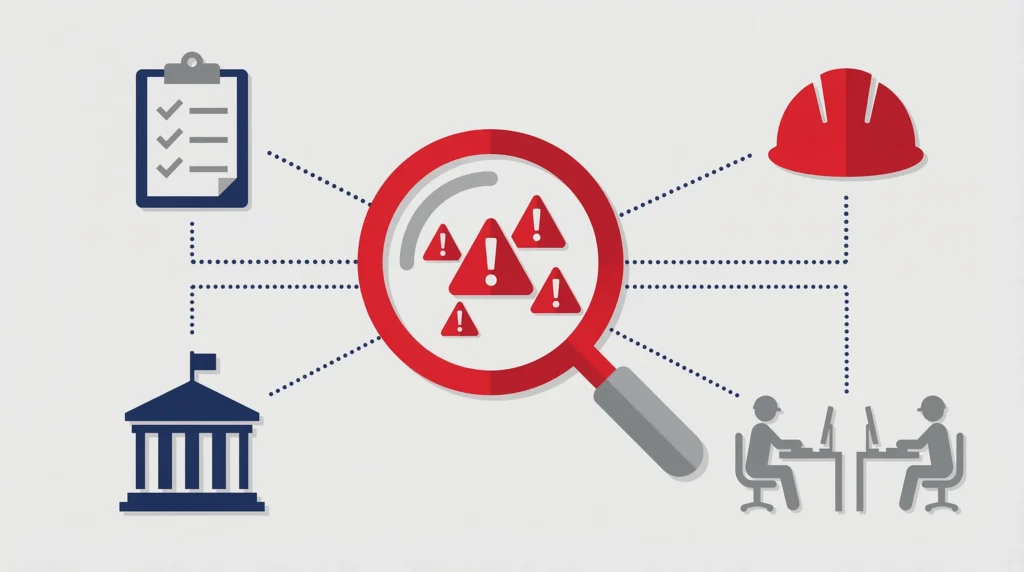
Due Diligence: Compliance Steps to Protect Your Business
Avoiding misclassification is all about proactive compliance and clear documentation. Here’s how to stay audit-ready:
1. Use a Legally Vetted Independent Contractor Agreement
Ensure every agreement clearly states:
- Independent business status
- Payment structure by project or deliverable
- Non-exclusivity
- Control over work hours and tools
Note: A contract alone won’t protect you but it helps establish intent.
2. Separate Employees from Contractors Operationally
Avoid giving contractors:
- Company laptops, phones, or email addresses
- Access to internal HR systems
- Employee benefits or training
- Performance improvement plans
3. Conduct Annual Classification Audits
Review contractor relationships regularly:
- Are they still independent?
- Are they now integrated into your team?
- Have their roles evolved over time?
Use a worker classification checklist to guide decisions.
4. Keep Detailed Records
Maintain documentation that supports independence:
- GST/HST registration
- Invoices to multiple clients
- Business insurance
- Proof of contractor’s own tools or workspace
5. Train Hiring Managers and Supervisors
Ensure your internal teams understand the difference between employees and contractors, and the compliance risk of getting it wrong.
6. Get Legal Review for Long-Term Contractors
A lawyer can assess classification risk and update your contracts before disputes arise.

Risk Management Through Proper Worker Classification
Worker classification is not a one-and-done task. As roles evolve and projects scale, a once-independent contractor can gradually become integrated into your team thereby creating compliance risk if you don’t reassess.
Ongoing Compliance Best Practices
- Review long-term contracts every 6–12 months
- Document your classification rationale
- Keep contractor and employee roles clearly separated
- When in doubt, consult an employment lawyer
The cost of misclassification including fines, audits, back pay, and lawsuits far exceeds the cost of proper compliance and legal review.
Final Takeaway
Ontario employers must take classification seriously. The ESA, CRA, and WSIB all actively enforce proper worker designation. Even if your contractor is happy with the arrangement, that won’t protect you in an audit.
If it walks like an employee and works like an employee, Ontario law will classify them as an employee regardless of what the contract says.
Call to Action
If your non-profit is starting a new chapter or planning for growth in Ottawa or the surrounding areas, we’re here to help.
📞 Call us at 613-979-3572
📧 Email us at info@dl-pc.ca
Let’s ensure your organization is built on a legal structure that supports your mission and your future.