
Introduction: Understanding Your Legal Position When Clients Don’t Pay
When a client stops paying, it’s not just frustrating – it directly hits your cash flow, your payroll, and your ability to grow. For Ottawa businesses, the good news is that you do have legal tools and practical steps you can take before writing off an unpaid invoice as a loss.
In Ontario, unpaid invoices are typically treated as breach of contract claims, whether your agreement is a formal written contract, a signed estimate, or even a combination of emails and purchase orders. As long as you can show:
- What was agreed (scope, price, timing)
- That you delivered your product or service
- That payment was due and not made
…you usually have a basis to pursue the debt in court if negotiation and collection efforts fail.
That said, this article is for information only, not legal advice. Laws change, and your situation may be unique. For specific legal questions, it’s wise to speak with an Ontario-licensed lawyer or paralegal, which you can find through the Law Society of Ontario’s referral services:
- Law Society of Ontario – Finding a Lawyer or Paralegal: https://lso.ca/public-resources/finding-a-lawyer-or-paralegal
Let’s walk through a practical, step-by-step, Ottawa-focused strategy you can actually implement.
Establishing Clear Payment Terms and Documentation from Day One
The easiest debt to collect is the one that never becomes disputed in the first place. Clear terms and strong documentation dramatically improve your odds of getting paid without drama.
Key Elements of Strong Payment Terms
At a minimum, your standard terms should cover:
- Payment due date (for example, “Net 15 days from invoice date”)
- Interest on overdue amounts (for example, “1.5% per month, 18% annually, on overdue balances,” staying within reasonable, non-usurious levels)
- Late fees or admin fees (if you charge them)
- Consequences of non-payment (suspension of service, collections, legal costs where permitted by law)
- Accepted payment methods (EFT, credit card, cheque, etc.)
- Any deposit or milestone payment structure
You can incorporate these terms into:
- Standard service agreements or sales contracts
- Credit applications for B2B customers
- Master services agreements (MSAs) with recurring clients
- The footer of every estimate, quote, and invoice
Cloud-based invoicing tools make it easy to bake your terms into every invoice you send. Popular options include:
- QuickBooks: https://quickbooks.intuit.com/ca/
- FreshBooks (founded in Toronto and popular with Canadian small businesses): https://www.freshbooks.com/
- Wave (free accounting and invoicing): https://www.waveapps.com/
Documentation That Helps You Get Paid
If you do end up needing a collection agency or court, the following documents become your best friends:
- Signed contracts or estimates
- Purchase orders and order confirmations
- Email chains confirming scope and price
- Time logs, delivery notes, or completion certificates
- Invoices and account statements
- Proof of delivery (courier receipts, signed packing slips)
- Proof of partial payments, if any
Set up a habit now: for every client, keep a clean digital file with all of the above in one place. Your future self will thank you.
Credit Checks for Higher-Risk or Larger Accounts
For larger B2B accounts or long-term credit terms, consider running credit checks or asking for references before extending generous payment terms. In Canada, common commercial credit information sources include:
- Equifax Canada: https://www.equifax.ca/
- TransUnion Canada: https://www.transunion.ca/
For higher-risk clients, you might:
- Shorten payment terms (e.g., Net 7 instead of Net 30)
- Require deposits
- Use progress billing instead of all at the end
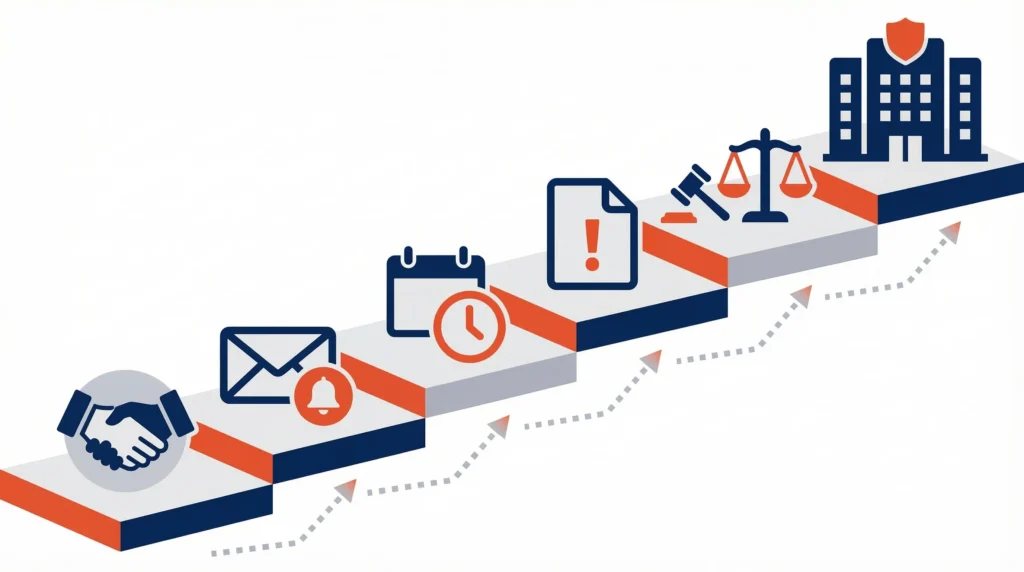
The Graduated Approach: When and How to Escalate Collection Efforts
You don’t want to jump straight from a polite reminder to a lawsuit. A structured, graduated approach helps you recover more accounts while preserving relationships where possible.
A Practical Collection Timeline
Here’s a sample escalation framework many Ottawa businesses can adapt.
| Stage | Timing (from due date) | Action | Tone | Goal |
| 1 | 1–7 days overdue | Friendly reminder email | Very polite | Nudge, assume oversight |
| 2 | 8–15 days overdue | Phone call + updated statement | Firm but courteous | Confirm there’s no dispute, get a date |
| 3 | 16–30 days overdue | Second written notice | More direct | Stress urgency, propose payment plan |
| 4 | 31–45 days overdue | Final internal notice | Formal | Advise of pending escalation |
| 5 | 46–60 days overdue | Demand letter (lawyer) or agency referral | Strong, legal tone | Show consequences, push resolution |
| 6 | 60+ days overdue | Legal action where economical | Formal legal process | Secure judgment or settlement |
You can compress or extend this timeline depending on the size of the debt and your cash flow needs, but the principle is the same: escalate gradually, with clear documentation at each step.
Writing Effective Reminder and Overdue Emails
A good reminder email is:
- Specific: includes invoice number, amount, and due date
- Solution-oriented: offers options (payment methods, due date, payment plan)
- Calm: assumes good faith, especially in early stages
Example structure:
- Subject: Friendly reminder – Invoice #1234 now past due
- Line 1: Acknowledge relationship and past work
- Line 2: State the amount and due date
- Line 3: Provide payment options and link/attachment
- Line 4: Ask for confirmation of a payment date or any issue with the invoice
Later-stage messages can reference your terms, mention potential interest or late fees, and clearly signal that you may escalate if there is no response by a specific date.
When to Pick Up the Phone
Calls are especially helpful:
- When emails are being ignored
- When you have a long-standing relationship
- When there may be a misunderstanding
On the call, try to:
- Confirm they received the invoice
- Ask if there are any disputes about the work or charges
- Understand cash flow issues (and whether a payment plan is realistic)
- Get a specific commitment: “Can you confirm a date and amount for payment?”
Follow up every call with a short email summarizing what was agreed.
When to Escalate Internally
You should move to your “final notice” stage when:
- Repeated reminders have gone unanswered
- Promised payment dates have been missed more than once
- The client is evasive, constantly delaying, or disputing without reasonable basis
Your final notice should:
- Recap the history (dates of invoice and reminders)
- Refer to your payment terms
- Set a clear deadline (for example, “If we don’t receive payment or hear from you by [date], we will refer this account to collections or pursue legal remedies.”)
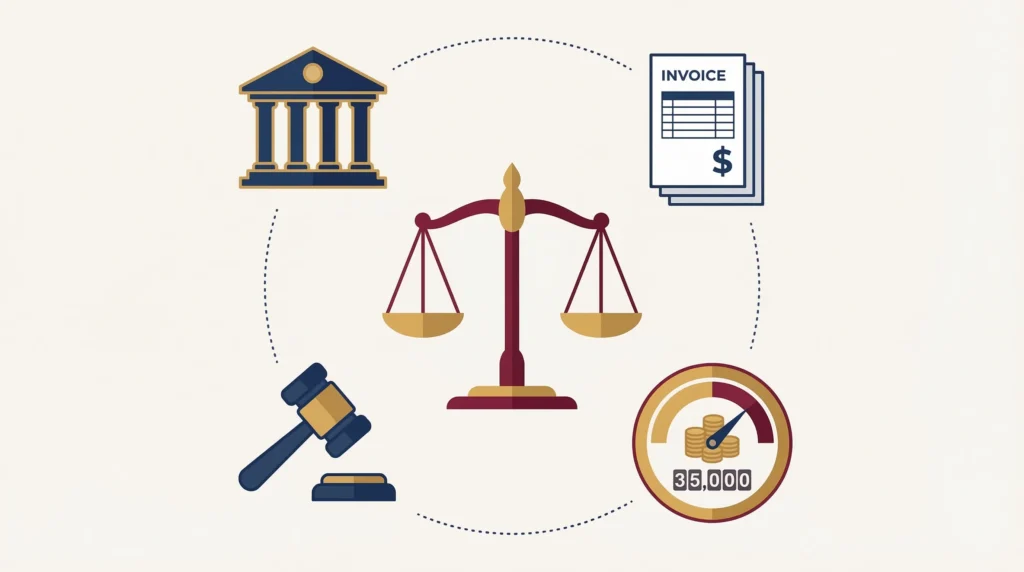
Ontario’s Legal Framework for Debt Recovery and Small Claims Court Options
If internal efforts fail, Ontario law gives you structured options to pursue the debt – especially helpful for small and mid-sized Ottawa businesses.
Limitation Periods: The Clock Is Ticking
Under Ontario’s Limitations Act, 2002, most contract claims must be started within two years of the date you discovered, or reasonably should have discovered, that you had a claim (typically when payment was due and not made):
- Limitations Act, 2002: https://www.ontario.ca/laws/statute/02l24
Practically, this means:
- Don’t sit on old, unpaid invoices for years
- Track the dates when invoices go into serious default
- Get legal advice early if an account is aging and you’re considering court
Small Claims Court vs. Superior Court
For most unpaid invoices, Small Claims Court is the most appropriate venue. As of my last update, Small Claims Court in Ontario generally handles monetary claims up to $35,000:
- Ontario Small Claims Court overview: https://www.ontario.ca/page/small-claims-court
Above that limit, you’d typically proceed in the Superior Court of Justice, which is more complex and expensive.
Common business-related claims in Small Claims Court include:
- Unpaid invoices
- Unpaid rent
- Payment for goods delivered or services performed
- Simple contract disputes
What You Need to Start a Small Claims Case
Generally, you’ll need to provide:
- The correct legal name of the debtor (corporation vs. individual)
- Your supporting documents (contract, invoices, emails, proof of delivery, etc.)
- A concise explanation of what happened and what you’re owed
Forms, filing fees, and guides are available from the Ontario government:
- Guides and forms: https://www.ontario.ca/page/small-claims-court-forms
You can often handle Small Claims Court yourself or with the help of a licensed paralegal, though for larger or more complex matters, a lawyer may be advisable.
After You Get a Judgment: Enforcement Options
Winning in court doesn’t automatically put money in your bank account; you may need to enforce the judgment. Common enforcement tools include:
- Garnishing the debtor’s bank account or wages
- Seizing and selling certain property (via the enforcement office)
- Examinations in aid of execution (forcing the debtor to disclose assets and income)
These processes can be technical; consulting a lawyer or paralegal familiar with Ontario enforcement procedures is usually a smart move.
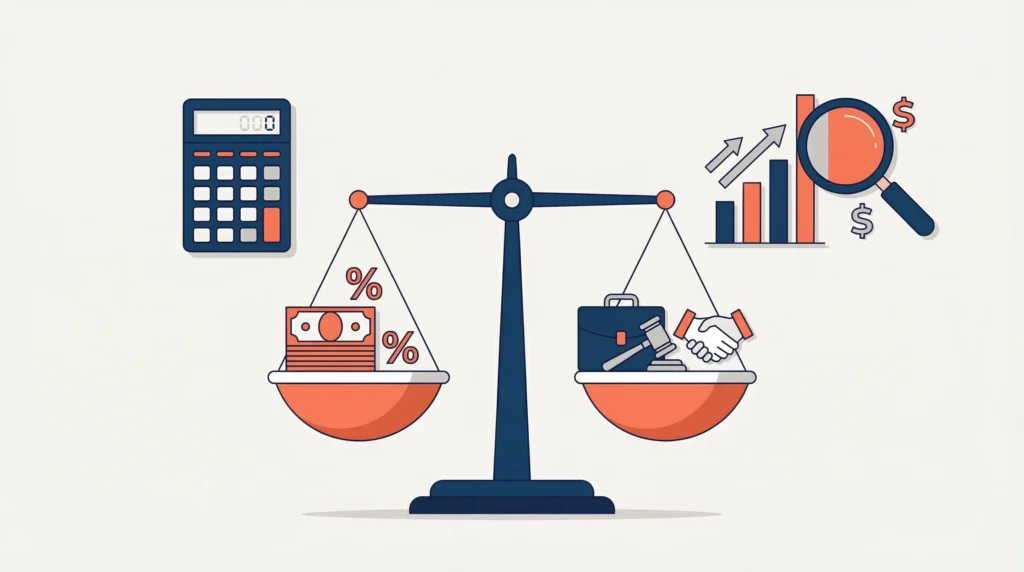
Working with Collection Agencies and Legal Counsel: Cost-Benefit Analysis
Sometimes, the most efficient thing you can do is outsource the problem – but only when it makes financial sense.
Collection Agencies in Ontario
In Ontario, collection agencies are regulated under the Collection and Debt Settlement Services Act:
- Collection Agencies – Ontario government information: https://www.ontario.ca/page/collection-agencies
For a business creditor like you, a collection agency typically:
- Works on contingency (they keep a percentage of what they collect)
- Uses phone, email, and letters to collect
- Escalates pressure but usually does not start lawsuits themselves (unless they own the debt or work closely with partner firms)
Common pros:
- No upfront legal fees (they get paid only if they recover)
- Frees your internal team from chasing accounts
- Useful for many small, older, or lower-value debts
Common cons:
- They take a significant cut of recovered funds (often 20–40% or more, depending on age and size of the account)
- More aggressive tactics can strain or end the relationship with the debtor
- Not all agencies are equally professional; you should vet them carefully
When to Use a Lawyer or Paralegal Instead
Legal counsel is often better suited when:
- The amount is relatively high
- The debtor seems to have assets or a viable business
- There is a legal dispute about the work, not just non-payment
- You want to send a formal demand letter that shows you’re serious
A typical path:
- Send your own final notice
- If no success, have a lawyer or paralegal send a demand letter
- If still unpaid and the amount justifies it, commence a court claim
Legal fees can sometimes be partially recoverable if you win, but that’s not guaranteed. Always consider:
- Amount owed
- Likelihood of collecting even with a judgment
- Your internal time and stress vs. outsourcing
Simple Comparison: Agency vs. Legal Action
Here’s a quick comparison you can use when deciding your next step.
| Option | Best For | Typical Cost Structure | Relationship Impact | Speed |
| Internal follow-up only | New or small overdue accounts | Staff time only | Generally preserves relationship | Fast to start, results vary |
| Collection agency | Many small/older debts, hard-to-reach debtors | Contingency percentage of amount collected | Can strain relationship | Moderate; depends on debtor |
| Lawyer/paralegal demand letter | Medium–large debts, clear liability | Flat or hourly fee | More formal, can still settle amicably | Often prompts quick response |
| Court action (Small Claims) | Disputed or stubborn accounts within limit | Filing fees + legal fees | Usually ends relationship | Slower, but authoritative |
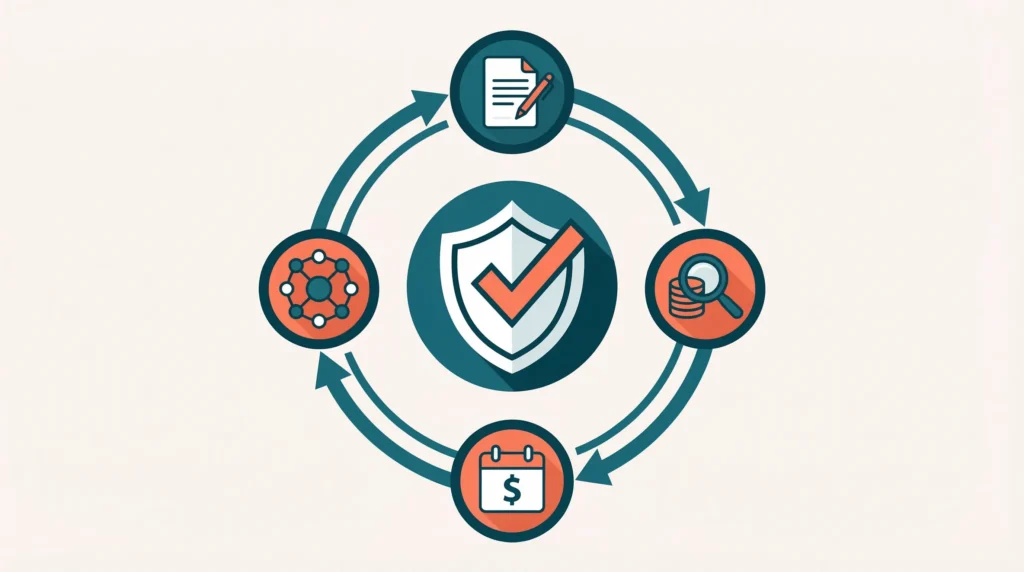
Building Sustainable Credit Management Practices to Minimize Future Risk
Recovering overdue invoices is important, but the real win is reducing how often you end up in that situation. For Ottawa businesses, strong credit management should be part of your growth strategy, not an afterthought.
Here’s a simple checklist you can implement over the next 30–60 days:
- Standardize your contracts and payment terms (and actually use them every time)
- Automate invoicing and reminders through tools like QuickBooks, FreshBooks, or Wave
- Train your team on your collection timeline and escalation steps
- Perform basic credit checks on larger or riskier accounts
- Monitor aging receivables weekly, not just at month-end
- Set internal thresholds: when to escalate, when to send to collections, when to consider legal action
- Build a relationship with an Ottawa-area lawyer or paralegal and, if needed, a reputable collection agency
- Review your bad-debt write-offs annually and adjust your onboarding and credit policies accordingly
Taking a systematic, Ontario-informed approach to debt recovery won’t eliminate every unpaid invoice. But it will:
- Improve your cash flow
- Reduce stress and guesswork
- Help you decide, faster, which accounts to pursue and which to let go
- Strengthen your overall financial resilience
If you haven’t already, this is a great time to sit down with your finance team, your bookkeeper, and your legal advisor to tailor a written credit and collections policy for your Ottawa business – so the next unpaid invoice is handled calmly, consistently, and strategically.
Legal Disclaimer
The information in this article is provided for general informational purposes only and is not legal advice. No content here shall be interpreted as implying that Dimitrov Law Professional Corporation or Atanas Dimitrov are the best or superior to any other lawyers or law firms. For guidance related to your specific situation, please consult a qualified professional.
Call to Action
Message us here with any questions OR visit our website: https://dl-pc.ca/.