
Signing a commercial lease in Ottawa can quietly become a six-figure mistake.
Most business owners focus on the headline numbers: the base rent, the term, and the location. But the real financial danger is buried in the fine print: personal guarantees, uncapped maintenance and operating costs, and one-sided clauses that keep you on the hook long after you hand back the keys.
This article breaks down the most common high-risk clauses in Ottawa commercial leases, how they work in practice, and what you can realistically negotiate before you sign.
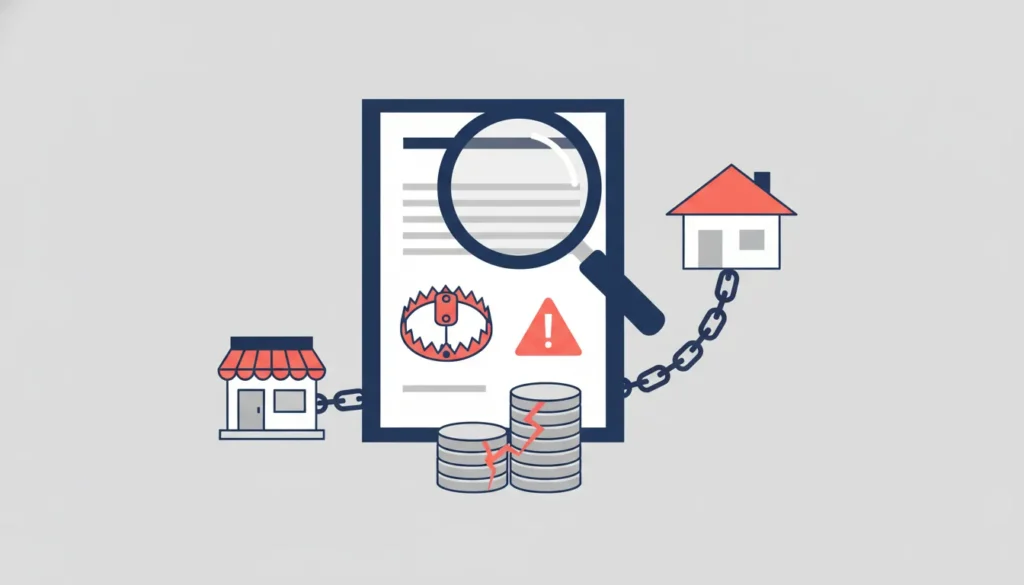
1. Introduction: The $200,000 Mistake Hiding in Your Ottawa Commercial Lease
Here’s a very real (and very common) scenario:
- You sign a 5-year lease for a small retail or office space in Ottawa.
- You personally guarantee the lease “unconditionally and irrevocably.”
- Two years in, sales drop, interest rates climb, and you need to shut down or move.
- The landlord re-rents the space slowly, at a lower rate, and sends you a claim for:
- Remaining rent on the term
- Unpaid common area maintenance (CAM) costs and property taxes
- Landlord’s legal fees and reletting costs
Total? It’s not unusual for that number to land deep into five figures, and in some cases, into the $200,000+ range for larger spaces or longer remaining terms.
The problem isn’t just the rent. It’s:
- Unlimited personal guarantees
- Aggressively drafted “additional rent” clauses
- One-sided landlord remedies
All of which are negotiable before you sign.

2. Personal Guarantees Decoded: Unlimited Liability In Ottawa’s Commercial Market
Most small and medium-sized Ottawa tenants will be asked for a personal guarantee, especially if:
- The business is a new corporation with no track record
- You are in retail, restaurant, or personal services
- The fit-out (tenant improvements) is expensive
Understanding what you are actually promising is critical.
What Is a Personal Guarantee?
A personal guarantee is a separate promise by an individual (usually the business owner) to be personally responsible for the tenant’s obligations under the lease.
Key points:
- It is often drafted as joint and several: the landlord can go after you, the corporation, or both.
- It typically covers all obligations: rent, additional rent (CAM, taxes, insurance), damages, legal fees, and sometimes even holdover rent.
- It often survives renewal, extensions, and sometimes even assignment unless the lease says otherwise.
If the business fails, your:
- Savings
- Home equity
- Future income
may be exposed to collection efforts and legal action.
Types of Guarantees You’ll See
Not all guarantees are created equal. Common structures include:
- Unlimited personal guarantee
- No cap on the amount or time.
- Highest risk; most common default form in “landlord paper.”
- Limited or capped guarantee
- Example: guarantee limited to 6 or 12 months’ gross rent, or a stated dollar amount.
- Sometimes burns off after a certain number of on-time payments.
- “Good guy” guarantee
- More common in some markets, but making its way into broader use.
- You personally guarantee rent only until you vacate and return the premises in good condition, provided you give required notice.
- Indemnity
- Similar effect to a guarantee but framed as a promise to indemnify the landlord against loss.
- Can be just as broad and risky if not carefully drafted.
If a clause uses language like:
- “absolutely and unconditionally guarantees”
- “without limitation as to amount”
- “on demand”
you are likely agreeing to unlimited liability. That is a red flag to slow down and get serious legal advice.
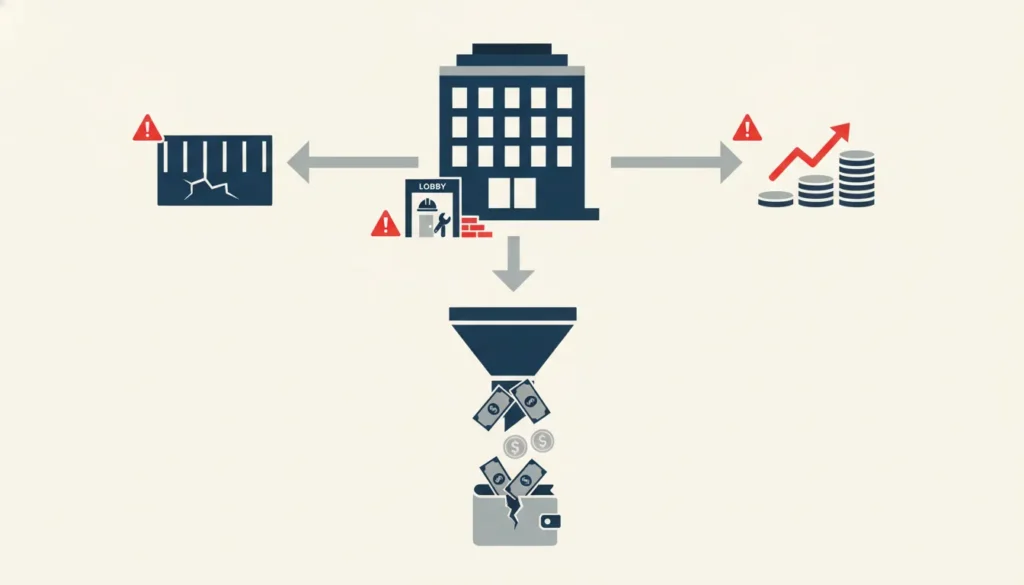
3. CAM Charges and Triple Net Traps: How Maintenance Costs Drain Your Budget
In Ottawa (and throughout Ontario), many commercial leases are drafted as:
- Net
- Double net
- Triple net (NNN)
In all of these, what you see as “rent” on the listing is just part of the story.
Base Rent vs Additional Rent
In a typical net or triple-net lease, you pay:
- Base rent
- The “headline” rate, often quoted as dollars per square foot per year.
- Additional rent
- Your share of operating costs, property taxes, insurance, and sometimes capital expenditures.
Additional rent is where surprises happen.
Common Components of CAM / Additional Rent
Landlord-recoverable costs often include:
- Common area maintenance: cleaning, snow removal, landscaping, lighting
- Repairs and maintenance to common areas and building systems
- Property taxes and sometimes business improvement area (BIA) levies
- Building insurance
- Management or administration fees
The danger is when:
- Categories are broad (“any other costs the landlord deems necessary”)
- There is no cap on annual increases
- Capital improvements are passed through as operating costs
Lease Type Comparison
Here’s a simple table to understand the structures you might see in Ottawa:
| Lease Type | Tenant Pays | Risk Profile |
|---|---|---|
| Gross | One all-in rent (landlord eats increases) | Most predictable, rare in retail |
| Net | Base rent + some operating costs | Moderate |
| Triple Net (NNN) | Base rent + taxes + insurance + CAM | Highest volatility |
In practice, many Ottawa commercial leases will call themselves “net” or “triple net” but the actual cost structure is entirely defined by the detailed “Additional Rent” and CAM clauses.
Triple Net Traps to Watch For
High-risk CAM language often includes:
- Tenant paying for “all repairs and replacements,” including structural elements
- Capital expenditures (new roof, major HVAC replacement) treated as operating expenses with full immediate pass-through
- Management fees calculated on top of CAM and taxes, instead of on base rent only
- No audit rights or right to review supporting invoices
- CAM allocated by anything other than proportionate share of rentable area
Even if the base rent seems competitive for Ottawa, the wrong CAM language can turn a “great deal” into a cash drain.

4. Red Flag Clauses: Contract Language That Signals Unfair Terms
You will almost never see a clause labeled “Warning: extremely risky.” Instead, risk is buried in technical or generic-sounding wording.
Here are specific language patterns to watch for.
Personal Guarantee Red Flags
- “The Guarantor unconditionally and irrevocably guarantees the prompt payment and performance of all obligations of the Tenant under this Lease, whether now existing or hereafter arising, without limitation as to amount.”
- “This guarantee shall remain in full force and effect notwithstanding any renewal, extension, amendment, assignment, or disclaimer of the Lease.”
- “The Landlord shall not be required to exhaust its remedies against the Tenant before enforcing this Guarantee.”
Translation: you are on the hook for everything, possibly forever, even after the lease changes or the tenant changes.
CAM and Maintenance Red Flags
- “Tenant shall be responsible for all costs of maintenance, repair, and replacement of the Premises, including structural components, roof, and foundation.”
- “Additional Rent shall include any other costs, charges, or expenses incurred by Landlord in connection with the ownership, operation, or maintenance of the Building, as determined by Landlord in its sole and unfettered discretion.”
- “Landlord may estimate Additional Rent, and Tenant shall pay such estimates. Any shortfall shall be payable on demand, together with interest at the Landlord’s standard rate.”
These provisions can open the door to:
- Tenants paying for major capital projects
- Unexpected year-end reconciliations
- One-sided estimation and interest on disputes
Other Dangerous Clauses
- Relocation clauses
- Allow landlord to move you to another unit in the building with little compensation.
- Disruptive and expensive if your business relies on foot traffic or specialized layout.
- Demolition / redevelopment clauses
- Allow landlord to terminate the lease on notice if they decide to redevelop the property.
- Danger if you invest heavily in leasehold improvements.
- Use and exclusivity clauses
- Overly narrow permitted use can make it hard to pivot or assign the lease.
- Lack of exclusivity can expose you to direct competitors in the same plaza.
If a clause is drafted with broad phrases like “from time to time,” “without limitation,” “in landlord’s sole discretion,” or “on demand,” your risk antenna should go up.

5. What Ottawa Landlords Actually Negotiate: Leverage Points And Compromise Strategies
Not everything is negotiable all the time, but more is negotiable than tenants often think.
Factors That Affect Your Leverage
- Vacancy levels in the building or plaza
- Type of property (prime downtown retail vs suburban office)
- Length of term you’re willing to sign
- Your covenant strength (financials, track record, brand recognition)
In highly desirable Ottawa locations, landlords may be less flexible on rent but more open to tweaking risk-related terms.
Commonly Negotiated Points
Here are areas where Ottawa landlords frequently show flexibility, especially for credible tenants:
- Personal guarantee structure
- Converting unlimited guarantees into:
- Capped guarantees (e.g., 6–12 months of rent)
- Guarantees that decline over time based on on-time payment history
- Guarantees that fall away upon assignment to a stronger tenant (with landlord approval)
- Converting unlimited guarantees into:
- CAM and operating cost protections
- Annual caps on controllable operating expenses (excluding taxes and utilities)
- Explicit exclusions for capital expenditures or major structural repairs
- Audit rights: right to review CAM statements and supporting invoices once per year
- Free rent and fixturing periods
- Free or reduced rent during initial build-out
- Early access to the space for construction before rent starts
- Assignment and subletting
- Landlord consent “not to be unreasonably withheld or delayed”
- Clear criteria for acceptable assignees or subtenants
- Release from personal guarantee upon assignment to a landlord-approved replacement
Landlords are often more willing to negotiate risk allocation (guarantees, CAM caps, assignment rights) than to dramatically cut base rent.

6. Exit Strategies and Protection Mechanisms: Caps, Triggers, and Escape Routes
A good commercial lease does not assume everything will go perfectly for 5 or 10 years. It builds in orderly ways to exit or limit damage if things change.
Tools You Can Build Into Your Lease
- Caps on exposure
- Cap your personal guarantee to a fixed dollar amount or a number of months of rent.
- Cap annual increases in specific operating expenses.
- Burn-off provisions
- Guarantee reduces or disappears after a period of clean payment history (e.g., after 24 or 36 months).
- Conditional termination rights
- Early termination option after a certain time, sometimes with a penalty (e.g., 3–6 months’ rent).
- Termination if key approvals, licenses, or zoning changes are not obtained.
- Assignment and sublease flexibility
- Broad right to assign or sublet, subject to reasonable landlord consent.
- Release from personal guarantee on assignment to a financially stronger replacement tenant.
- Construction and delivery protections
- Deadline for landlord to deliver premises ready for your fixturing work.
- Termination right or rent abatement if delivery is significantly delayed.
- Casualty and redevelopment
- Clear rules on what happens if the building is damaged or destroyed.
- Fair compensation or termination rights if the landlord redevelops.
These tools don’t eliminate risk, but they convert an “all or nothing” personal bet into something more manageable and foreseeable.
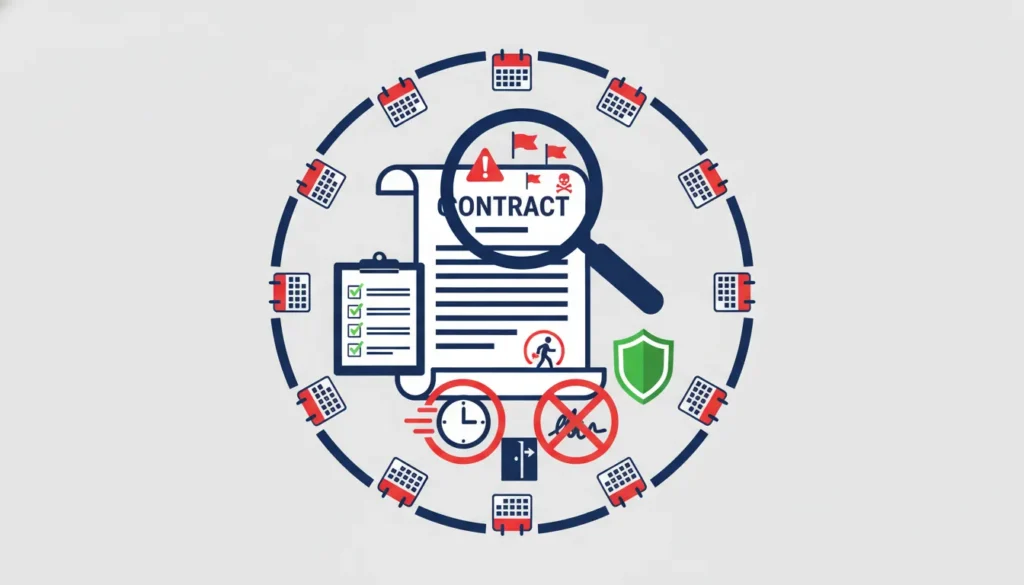
7. Before You Sign: Due Diligence Checklist And When To Walk Away
The most important decisions happen before you sign, not after.
Pre-Signature Due Diligence Checklist
At minimum, you should:
- Get the full, unsigned lease form early
- Read the entire document (yes, all of it)
- Flag and understand all provisions on:
- Personal guarantees and indemnities
- Additional rent, CAM, and operating costs
- Repairs: who is responsible for what
- Assignment, subletting, and change of control
- Default and remedies
- Relocation, demolition, and redevelopment
- Ask your lawyer to:
- Explain worst-case scenarios in plain language
- Propose specific wording changes, not just general comments
- Model the total occupancy cost:
- Base rent + realistic CAM + taxes over the full term
- Build in annual increases and possible renovations
If you are signing a guarantee, make sure you know:
- Exactly what is guaranteed
- For how long
- Up to what amount
- Under what circumstances it can be released or reduced
When Walking Away Protects Your Business
Sometimes the risk embedded in the lease is bigger than the opportunity in the space.
You should seriously consider walking away if:
- The landlord refuses any limit on a broad, unlimited personal guarantee
- You are responsible for major structural repairs or capital replacements
- CAM language is broad, uncapped, and not subject to any audit or review
- Assignment rights are extremely restricted or allow the landlord to refuse consent for competitive reasons with no objective criteria
- Relocation or demolition clauses give the landlord wide termination rights with little notice and minimal compensation
There will always be another space. There will not always be another chance to undo a personally guaranteed, one-sided lease.